
Schema markup is structured data that tells search engines what a firm is, where it works, who is on its team and what it has built, so a search for the firm's name returns a rich result with its logo, location and specialties.
Structured data that tells Google exactly what your business does, where you operate, what services you provide, and what your projects look like. When prospects search your company name, Google shows rich results with your logo, service areas, and project types.
of 154 luxury residential firms were missing this capability
Most web designers skip this, because they build for traffic rather than for the referral search.
Schema markup is code that structures your website information for search engines. It doesn't change what visitors see—it changes what Google understands about your business.
When someone Googles "[Your Company Name]," proper schema markup means Google displays:
This is referral validation in action. The search result itself communicates professionalism before the prospect even clicks.
We implement LocalBusiness schema, ImageObject schema for projects, Person schema for team members, and social profile linking. It's invisible to visitors, and few firms in luxury residential have it.
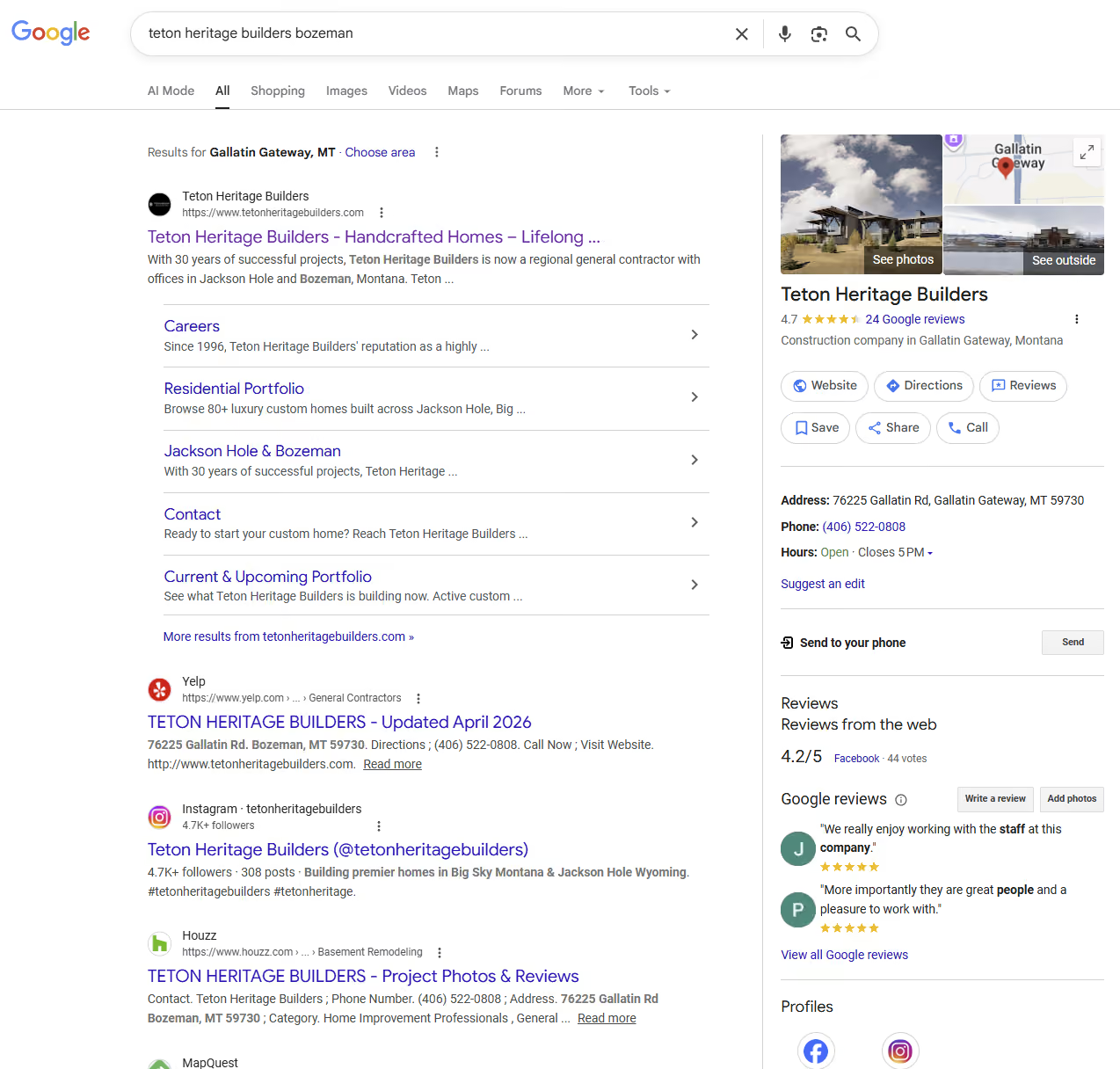
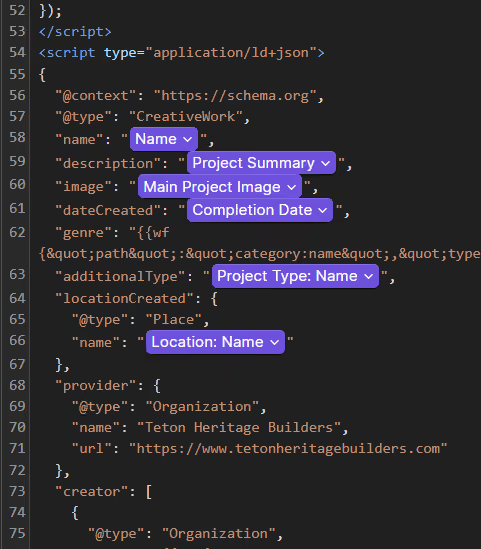
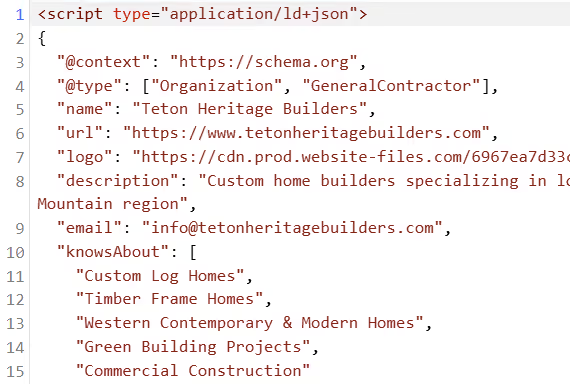
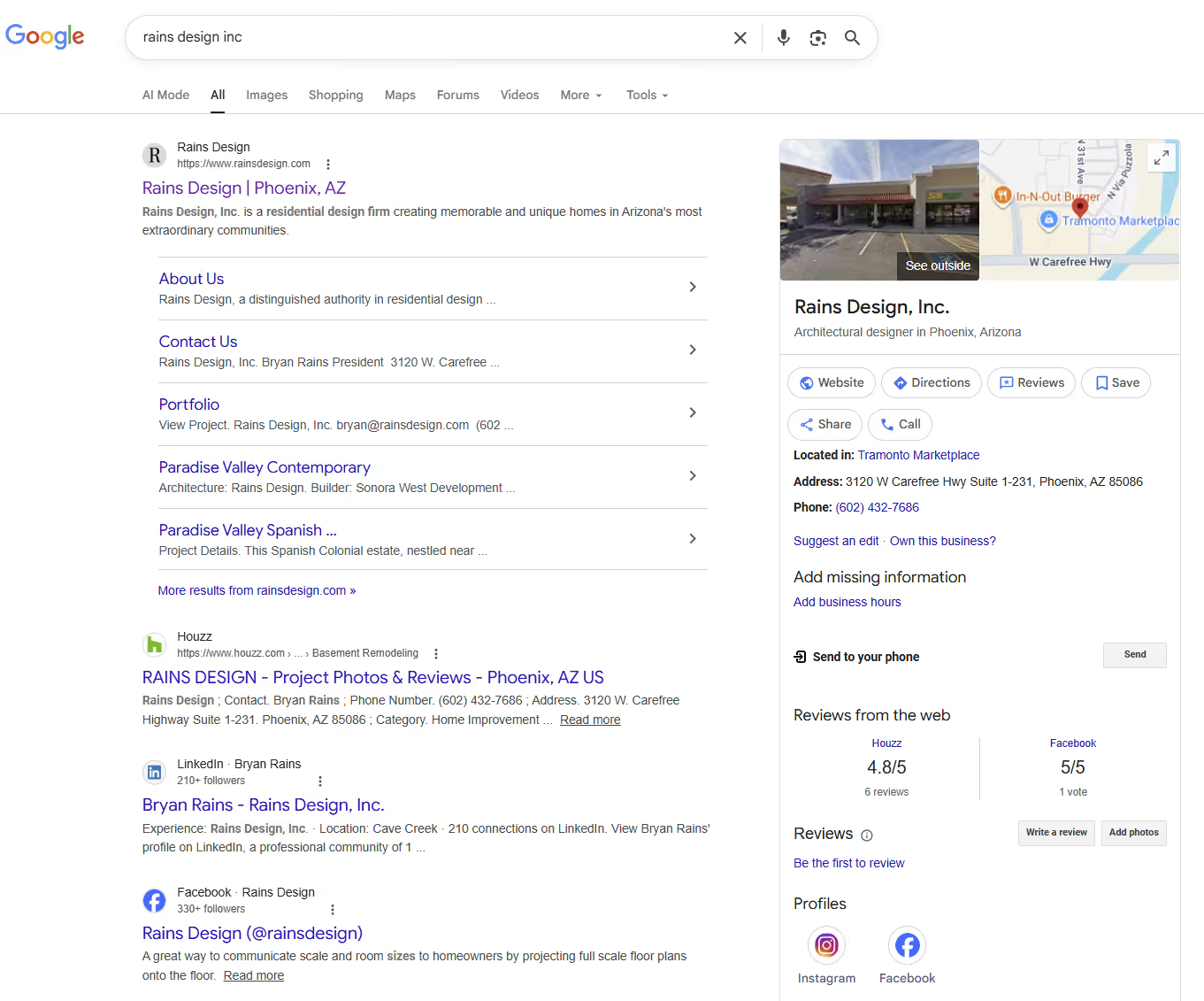
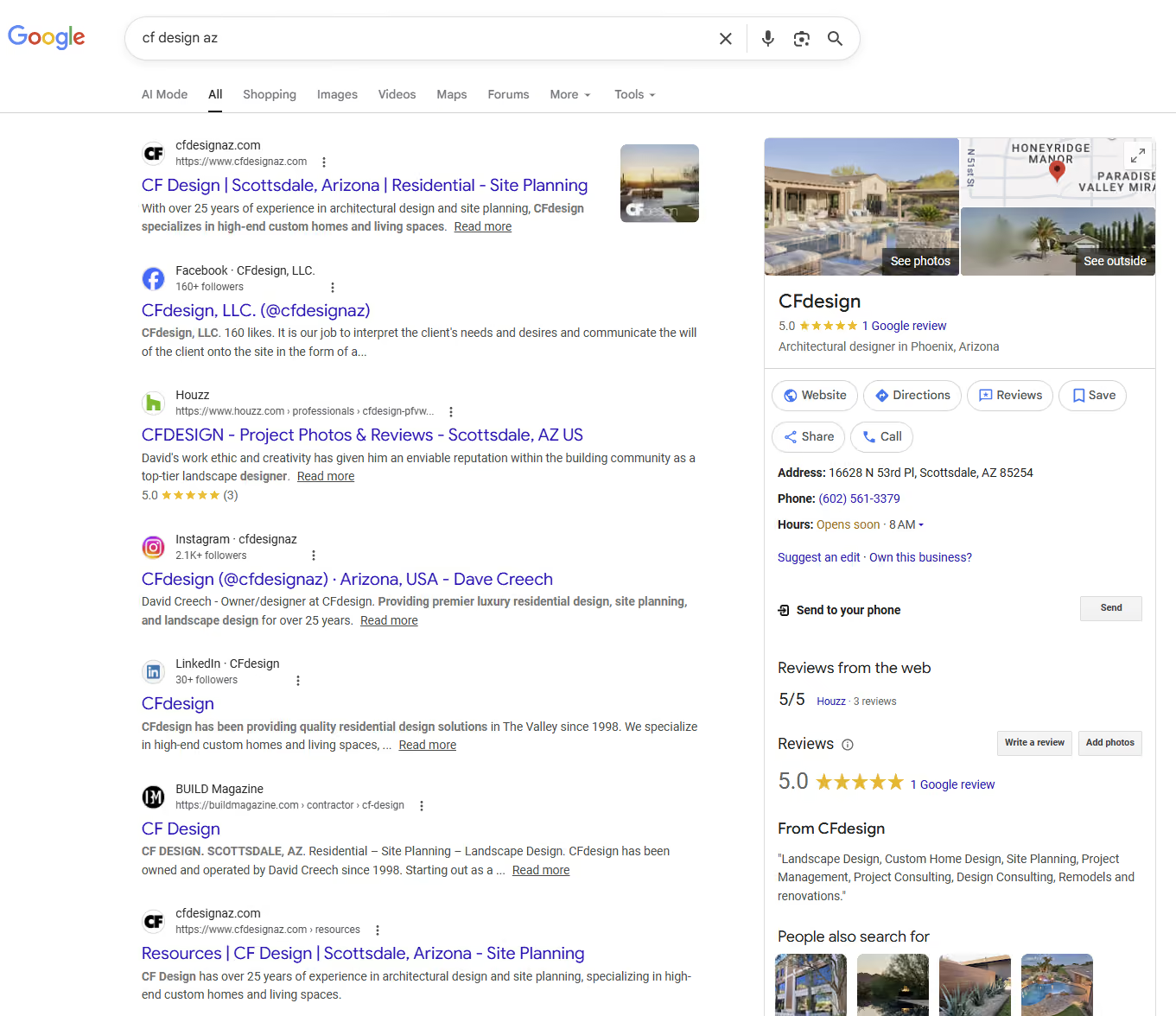
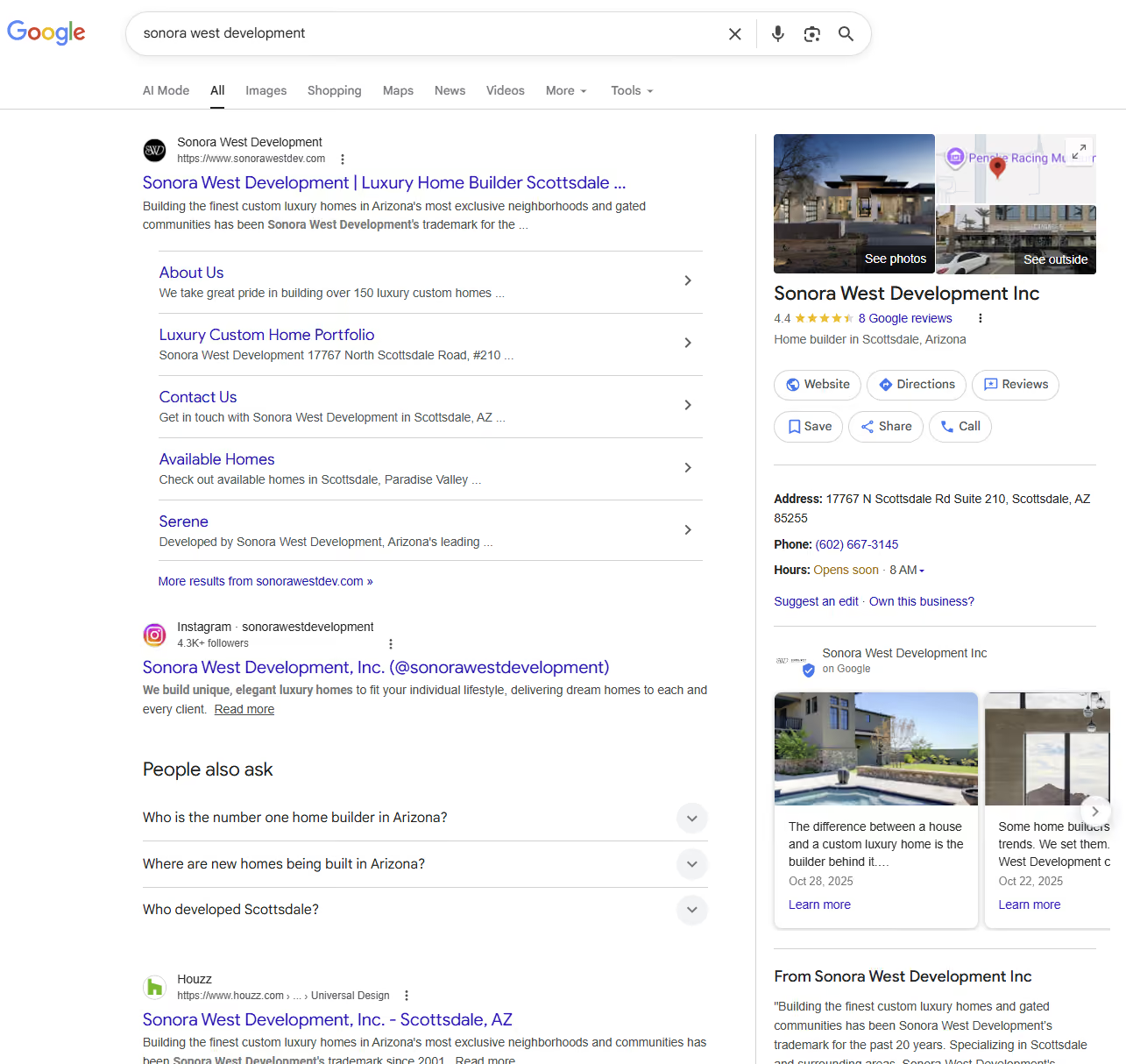
We add structured data for the business, its locations and service areas, each team member, each project and its images, and the firm's social profiles. On CMS pages the markup is mapped to the collection fields, so every new project or team member gets correct structured data automatically.
Schema markup supports referral validation: it is what turns a search for your firm's name into a result that already looks like the firm it's describing. In the 2026 Benchmark, 22% of firms were missing the structured data that wins a brand-name search.
Book a consult and we'll look at how your site handles the referral moment today, and what it would take to close the gaps.

